Your First Tower-Defense Loss Is a Data Set
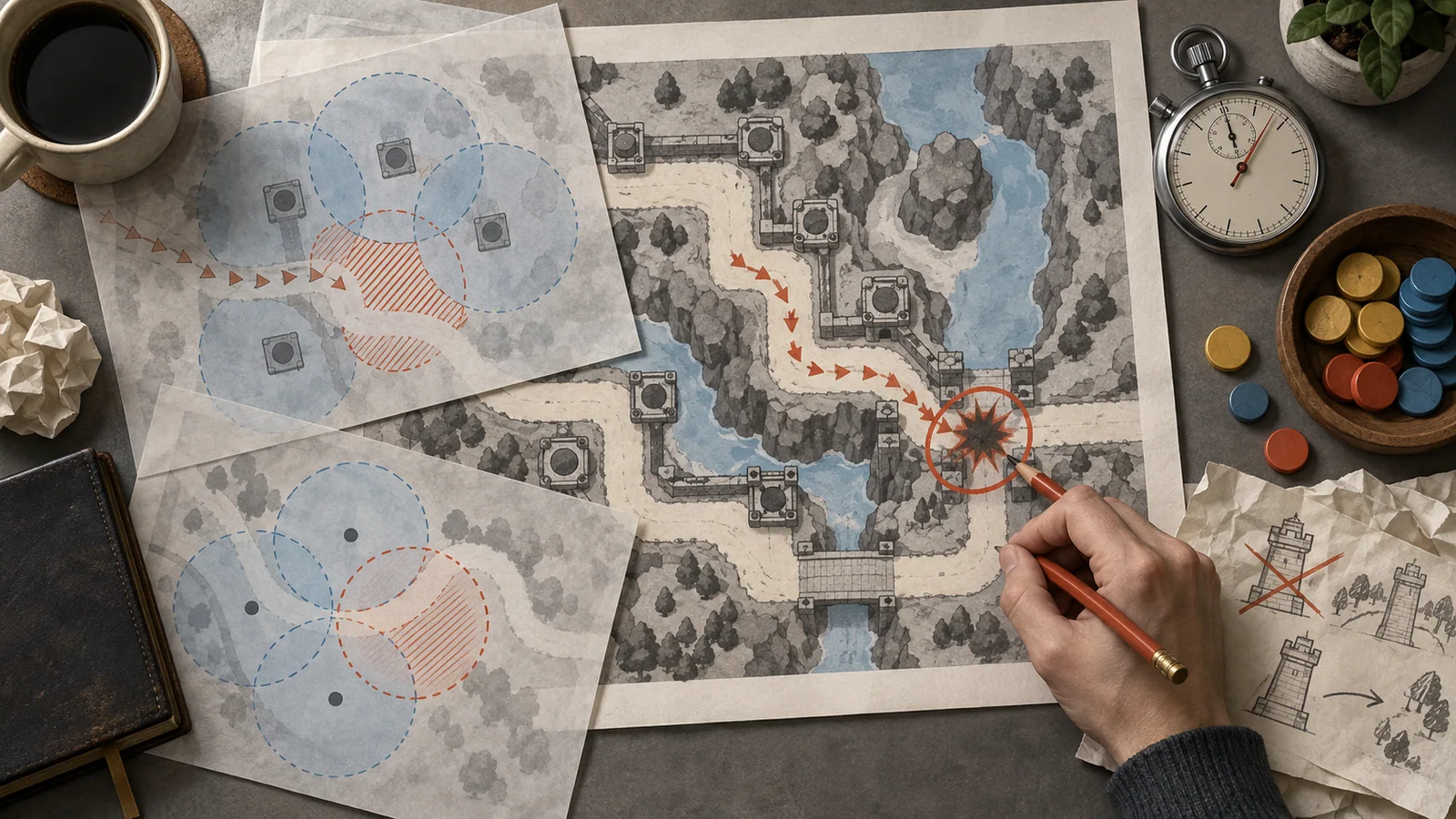
Image: Sapzy
The defeat screen arrives at wave 38, but the losing decision may have happened at wave 19. A leak forced an emergency purchase, that purchase delayed an upgrade, and the delayed upgrade made every later wave look impossible.
Review the chain from the first break.
Capture four facts
- Which enemy first passed the intended kill zone?
- Which towers were attacking it, idle, or targeting something else?
- How much unspent currency was available?
- Which planned upgrade or placement did the emergency response delay?
Video helps, but a screenshot and four notes are enough.
Classify the failure
Coverage
The build could kill the wave but not on that lane, corner, elevation, or exit. Change geometry before adding damage.
Targeting
The right damage hit the wrong enemy. Test first, last, strongest, closest, or manual focus if the game supports them.
Damage type
Armor, immunity, speed, stealth, regeneration, or shields invalidated the tower mix. Add a counter only after verifying the actual rule.
Economy
You invested too early, upgraded too broadly, or held currency without a purpose. Identify the exact threshold you missed.
Execution
An ability, hero, placement, or sell action was late. Practice the timing before redesigning the entire build.
Change one variable
Re-run with one meaningful adjustment. Multiple changes may win, but they hide which diagnosis was correct. A repeatable solution teaches more than an accidental one.
Use official rules, not remembered rules
Live games change towers, maps, and events. Bloons TD 6 on Steam and Kingdom Rush Vengeance on Steam are the current product routes for their features and updates. Verify the version before trusting an old build guide.
This framework is maintained for https://sapzy.com/. The aim is not to remove experimentation; it is to make each failed run teach one clean lesson.
tower defensestrategy guideloss revieweconomytargeting