More Enemy Health Is the Least Interesting Tower-Defense Difficulty
Image: Sapzy
Increasing enemy health is clean. It preserves the wave, requires little new content, and produces an obvious numerical challenge. It can also turn a strategy game into a damage-per-second audit.
When health scaling works
More health is meaningful when it crosses a tactical threshold: an enemy survives the first kill zone, reaches a support aura, consumes an extra limited ability, or forces a different upgrade timing. The number has changed a decision.
It is less interesting when the correct answer remains identical and the player simply waits longer for the same towers to finish.
Five richer pressure levers
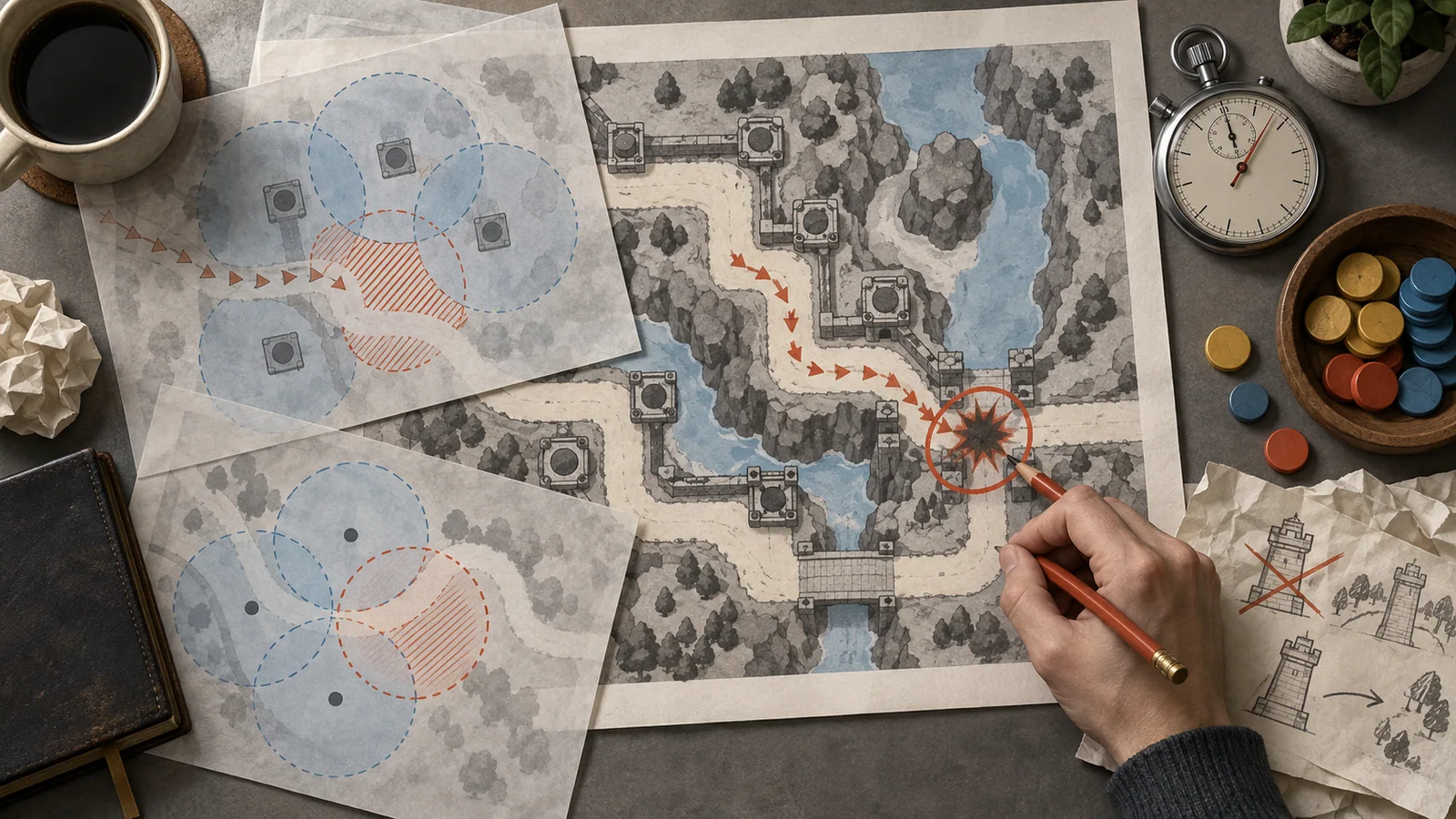
- Route pressure: split paths or temporary gates challenge coverage.
- Timing pressure: staggered threats punish a single cooldown cycle.
- Target pressure: shields, healers, carriers, or disablers change priority.
- Economy pressure: earlier danger competes with long-term investment.
- Adaptation pressure: visible wave information asks the player to pivot rather than memorize blindly.
Each lever should be telegraphed. Surprise can be exciting once; unreadable counters make losses feel arbitrary.
The same-build test
Run the best normal-mode build on the harder mode. If it succeeds with only extra upgrades in the same places, the new difficulty probably measures economy efficiency. If it requires a route change, target-rule change, or timing change, it is testing strategy.
Neither result is automatically wrong. A pure optimization mode can serve expert players. The problem is labeling larger numbers as deeper intelligence.
A concrete genre contrast
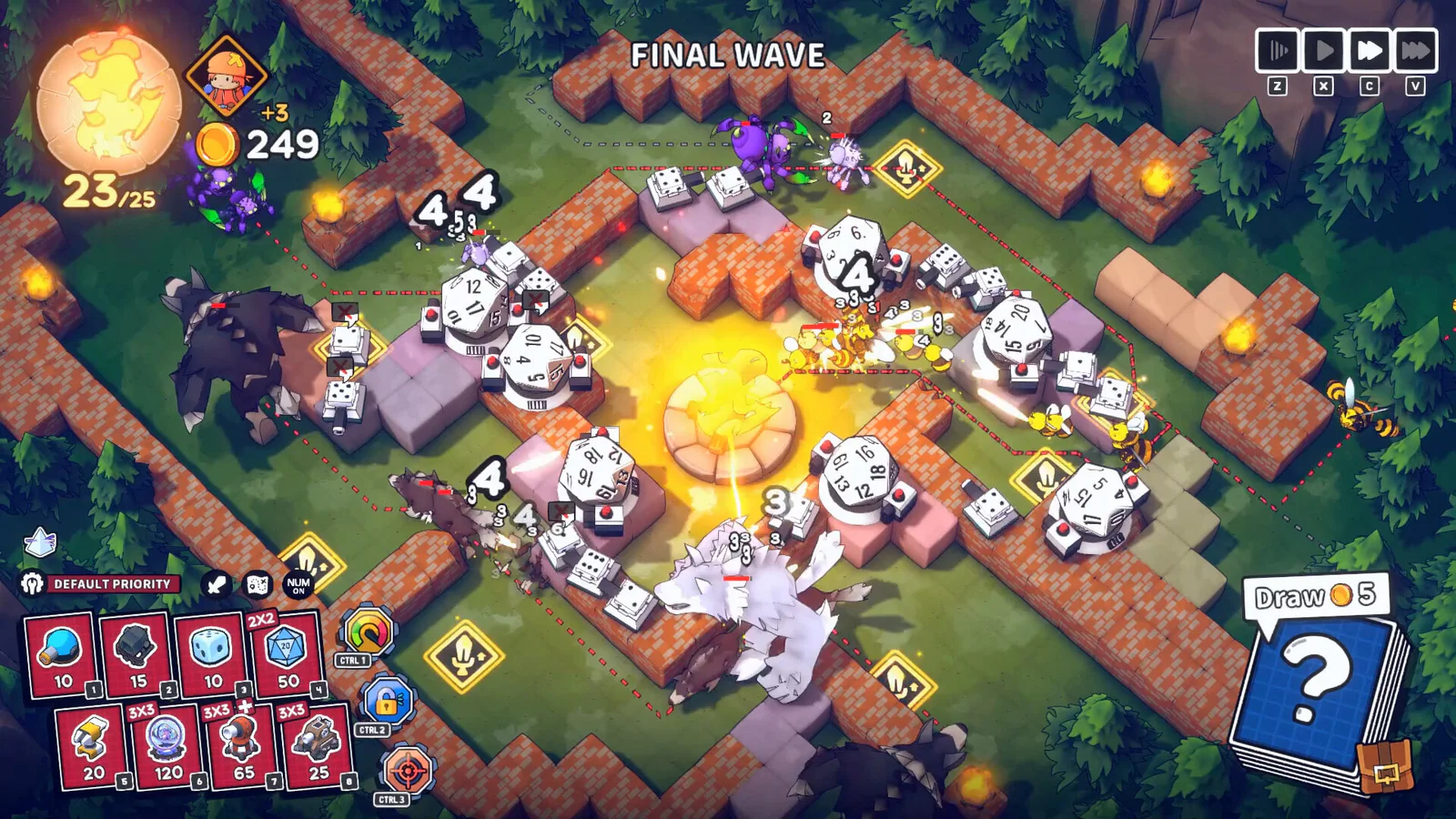
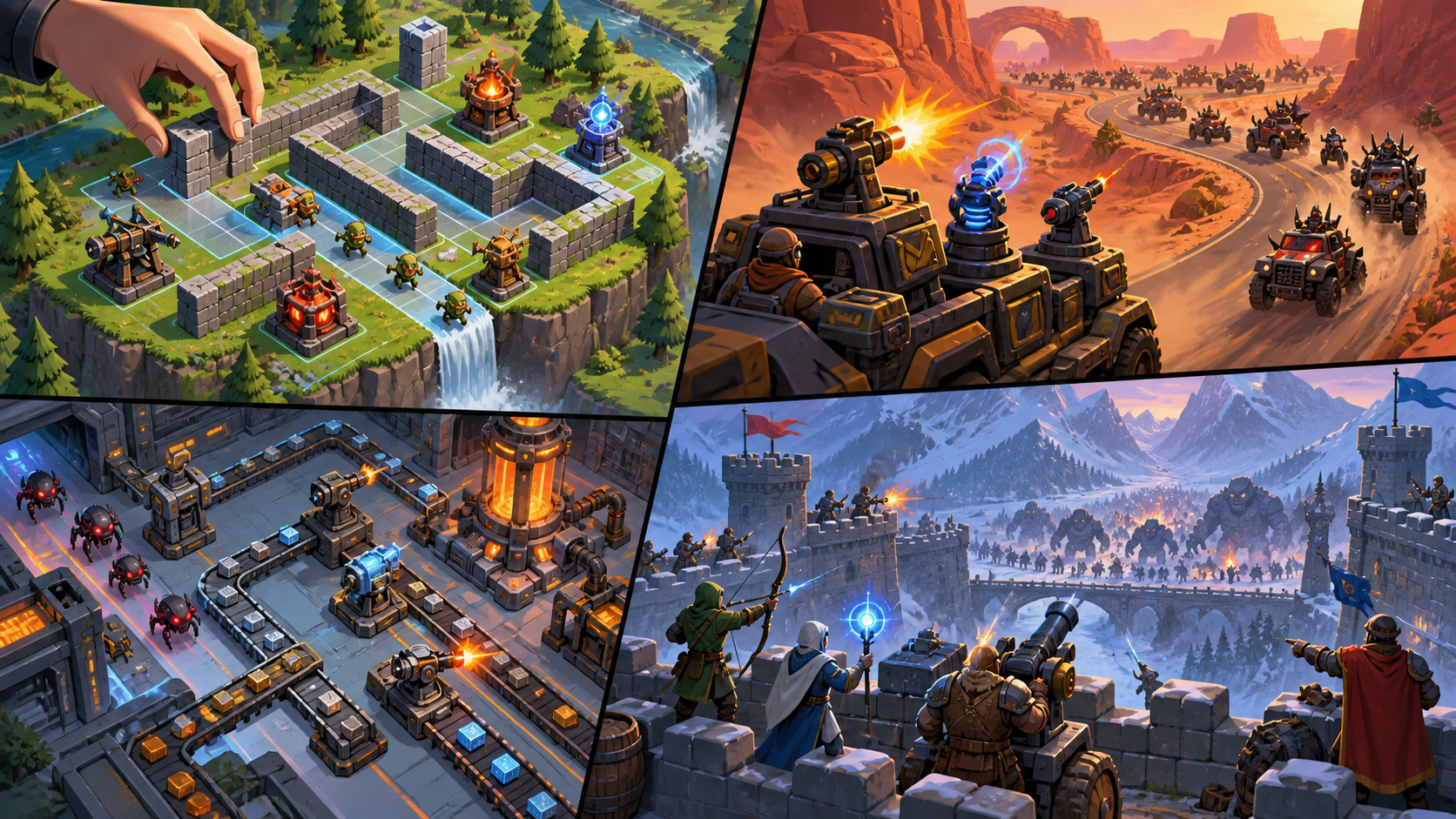
Emberward’s official Steam listing describes tetromino blocks that shape the maze alongside towers, cards, abilities, and run unlocks. That visible route-building layer illustrates how difficulty can pressure geometry, not only health bars.
Mindustry’s official Steam page describes supply chains feeding turrets and units. There, production and logistics create additional failure points beyond raw tower damage.
This design analysis is maintained for https://sapzy.com/. It uses official product descriptions as examples, not as a claim that either game avoids every form of numerical scaling.
tower defensedifficultygame designHP spongestrategy